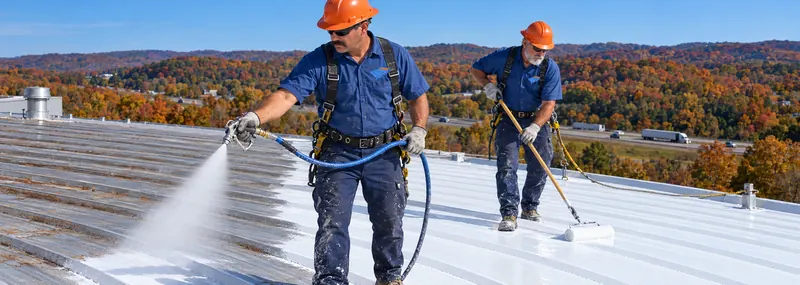
Pitched Metal
Full Acrylic System
Base and top coats over a pitched R-panel or standing seam roof after the laps and screws are sealed.

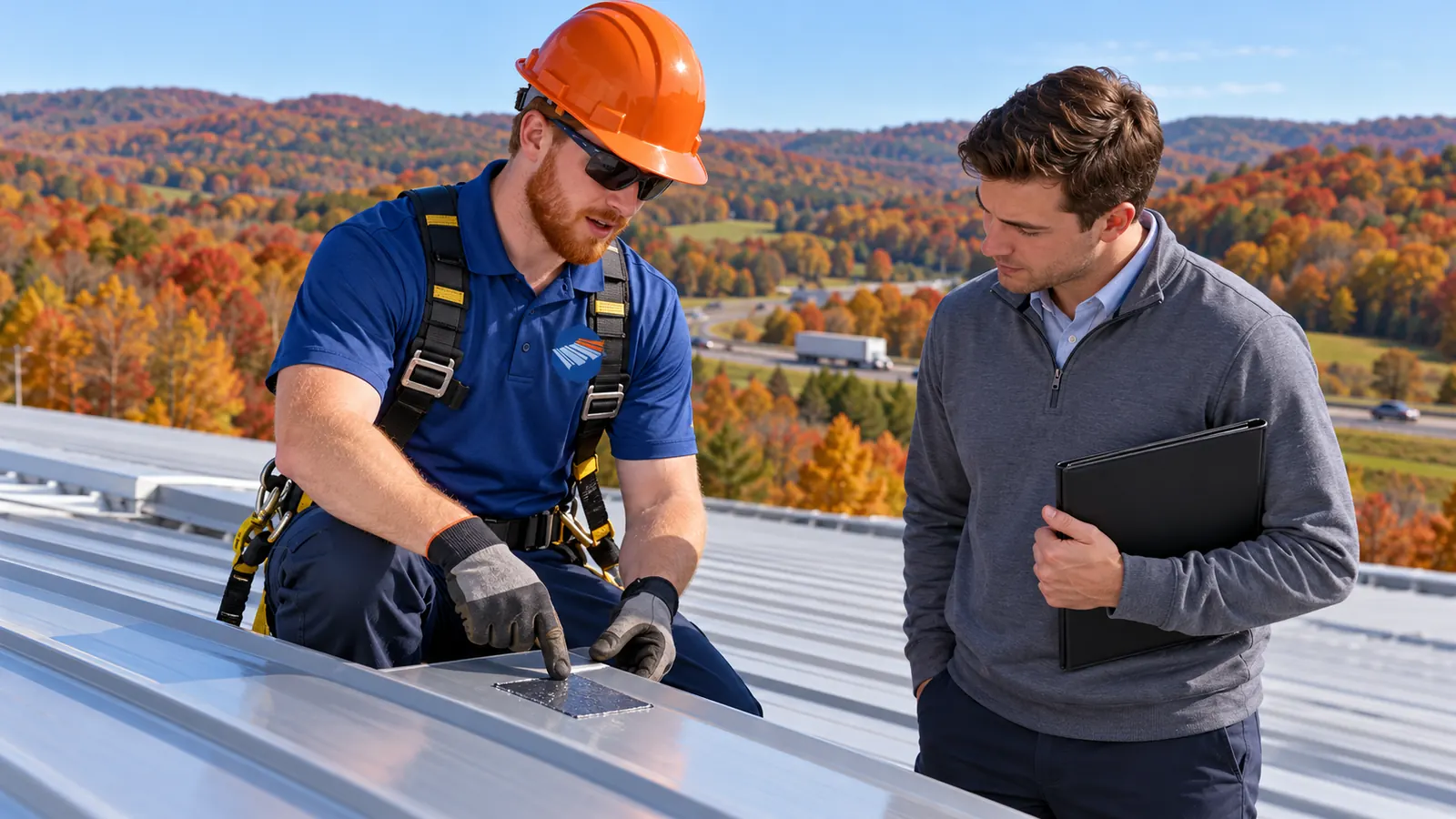
We apply acrylic roof coating in Elizabethtown on pitched metal that sheds rain fast. We walk the slope and check each lap first, then roll the acrylic on warm, dry days.
Acrylic roof coating in Elizabethtown needs a roof that drains. If water clears the panels within hours, acrylic is a strong candidate.
| Roof Part | Ready To Coat | Fix First |
|---|---|---|
| Pitch | Water runs straight to the gutters | Flat spots get a silicone or urethane detail |
| Panels | Faded, chalky paint, light rust | Rust-through gets panel swaps first |
| Laps | Leaking end laps on a pitched run | Lifted ribs get stitch screws first |
| Old Coating | Earlier acrylic that is still bonded | Silicone underneath rules acrylic out |
| North Slopes | Dry by midmorning | Shaded runs get scheduled for afternoons |
Pre-engineered buildings and R-panel sheds around Elizabethtown shed water quickly. These are the conditions acrylic handles on them.
Faded paint that rubs off on a glove means the original finish is spent. After a wash and rinse, acrylic gives the panels a fresh white surface.
Even pitched panels leak at end laps once movement opens them. Fabric and base coat go over each lap before acrylic covers the field.
Rust rings around screw heads spread into the panel face. New screws where needed, then a cap of brush-grade coating over every head.
Caps with cracked closure sealant let wind-driven rain in at the top of the roof. They get fastened, their joints reinforced, then coated.
Kentucky mornings leave dew on roof panels that has to burn off. Acrylic needs that surface dry and above the dew point before it goes on.
Acrylic shows up in a few roles on Elizabethtown roofs, alone or beside a second product.
Base and top coats over a pitched R-panel or standing seam roof after the laps and screws are sealed.
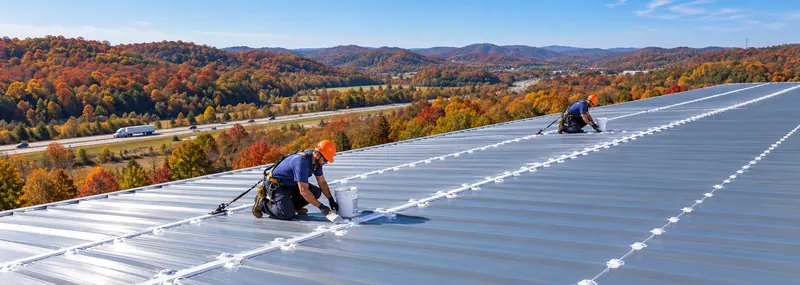
Acrylic on the draining field, with silicone or urethane at flat spots near curbs and behind parapets.
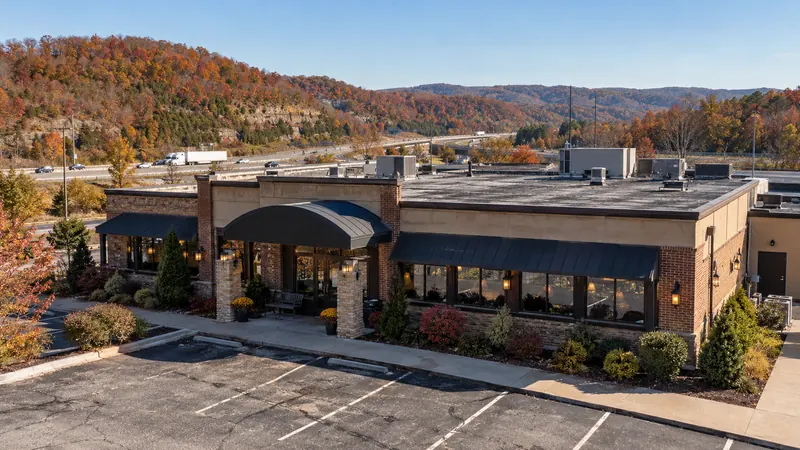
A cleaning and fresh acrylic over an earlier acrylic coat that is still bonded and showing wear.
Acrylic pays off on roofs that drain well. These benefits rest on dry cure days and a sealed set of laps.
The finish stays bright, so the panels reflect more sun on hot afternoons and run cooler over offices and cooled storage.
Being water-based, acrylic has a mild odor while it goes on, which matters near offices and air intakes.
A later recoat over a clean, well-bonded acrylic film is a short job, since the product bonds to itself.
The existing panels stay in place, closing the roof over the building the whole time.
Get a range for an acrylic coat on your pitched roof. It takes about two minutes and needs only the roof size.
Four stages, timed around warm, dry days so each coat cures before rain.
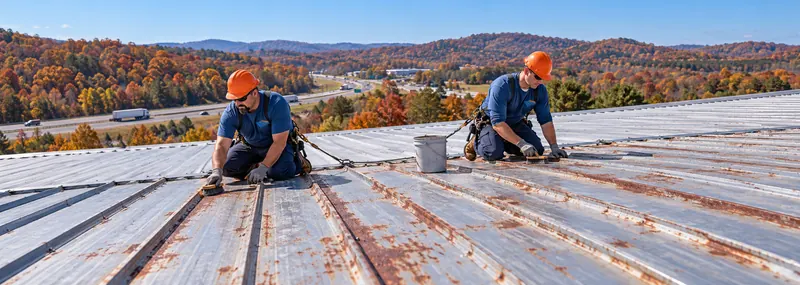
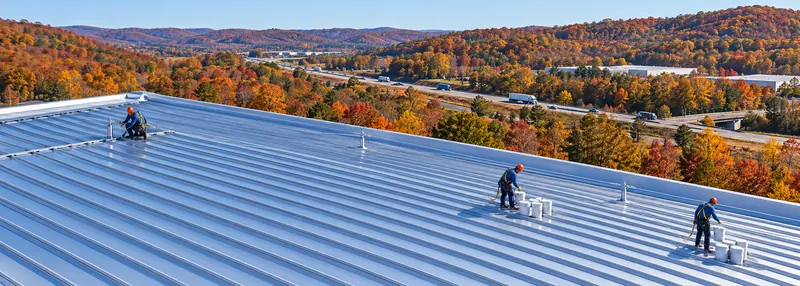
We walk the slopes, check laps, screws, and ridge caps, and note any flat spots that hold water. A surface gauge tells us how late dew lingers on the north side.
Bad panels get swapped, loose screws replaced, and the roof washed with the maker-approved cleaner. A full rinse leaves no film for the acrylic to sit on.
Rusted or galvanized steel gets its primer, laps get fabric, screws get capped, and any flat spots get a silicone or urethane detail coat.
Base and top coats go on when the forecast stays dry through the cure window, with thickness checked across the ribs and valleys.
Pitched roofs often have a flat corner or an insulation problem. These systems cover those parts.
Low spots near curbs and behind parapets, where acrylic would sit in water, take this instead.
Silicone Roof Coating in Elizabethtown →The full metal prep sequence that comes before any acrylic goes down.
Metal Roof Coating in Elizabethtown →Steep shingle sections, mansards, or entry canopies on the same building get this treatment.
Shingle Roof Coating in Elizabethtown →Answers about cure weather, dew, and where acrylic fits on an Elizabethtown roof.
Acrylic makes sense on metal with enough pitch to drain quickly, and when you want a bright white, water-based finish. It cures as its water evaporates, so cool nights with heavy dew slow it and early rain can wash it off. Flat spots near curbs get a silicone or urethane detail.
A dry roof, no rain through the early cure, and a surface warm enough to stay above the dew point. We check surface temperature against dew point with a gauge, watch wind before spraying near parked cars, and follow the temperature and humidity limits on each product data sheet.
No, acrylic will not bond to cured silicone. If the roof already carries silicone, the recoat stays silicone. We check what is on the roof during the inspection, since old coats often carry no label.
It can, on buildings that are cooled and lightly insulated. The Cool Roof Rating Council directory lists reflectance and emittance for rated coatings so you can compare products. An unheated storage building sees less benefit.
Each product sheet sets the cure window, and we schedule coats so the forecast stays dry through it. Shaded north slopes dry slower, so they get afternoon slots when dew has burned off.
Late spring through early fall gives the warm, dry stretches acrylic needs. Cool nights with heavy dew in early spring and late fall slow the cure, so jobs then get shorter work days that start after the panels dry. We plan around the forecast and the product temperature limits for each day on the roof.
Tell us the roof size and what is leaking. We check the slope, the laps, and the weather window, then price the acrylic coats.
Leave a name and number, and we will call to talk through the leaks, rust, or coating question on your building.
Or call (270) 236-5261 now