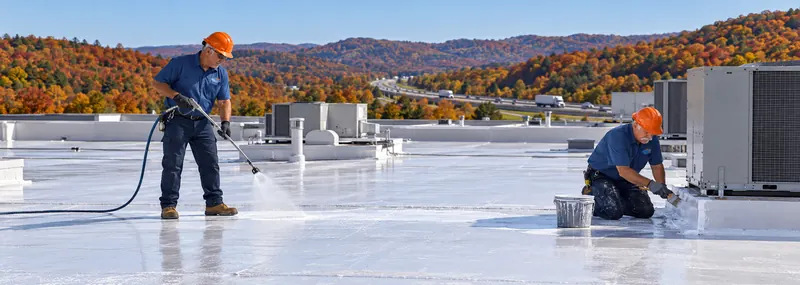
Low Slope
Silicone Over Metal
Holds up where water sits at gutters and behind curbs. It needs primer on bare or rusty steel, and any later recoat must also be silicone. We gauge it heavier along the gutter line.

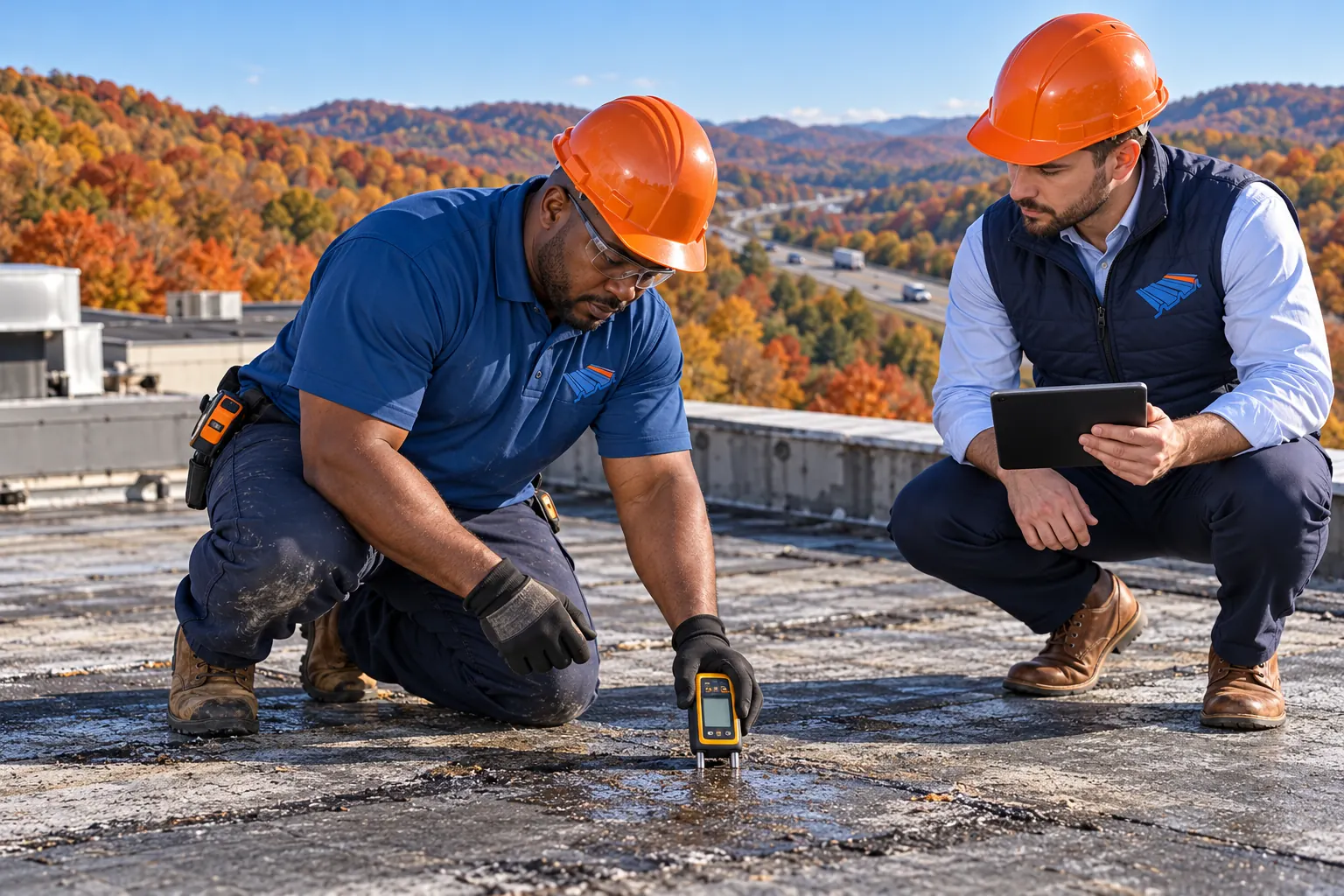
We coat commercial metal roofs across Elizabethtown. First we inspect every screw, lap, and gutter, then rust gets cleaned to firm steel and primed before any coat goes down.
Commercial metal roof coating in Elizabethtown works on panels that still hold screws and keep their shape. Here is how each part of the roof sorts out on a walk.
| Roof Part | Ready To Coat | Fix First |
|---|---|---|
| Panels | Surface rust, chalky paint, faded color | Rust-through along whole runs gets re-paneled |
| Screws | Loose or backed out, washers cracked | Wallowed holes get larger-diameter screws first |
| Laps | Drips at end laps and side laps | Lifted ribs get stitch screws tightened first |
| Purlins | Straight, firm, light surface rust | Sagging or rusted-through framing gets repaired |
| Insulation | Dry, hanging flat under the deck | Soaked batts get replaced before coating |
Exposed-fastener R-panel covers most warehouses and plants near I-65, with standing seam on newer offices. These five conditions show up again and again.
Orange streaks start at screw heads, scratches, and cut panel edges, then spread under the paint. We clean down to firm steel and seal it with a rust-inhibiting primer before any base coat.
Hundreds of screws hold an R-panel roof, and daily movement backs them out along purlin lines. Any screw standing proud of the panel or angled off true gets replaced with a larger one.
Water running downslope meets each end lap head-on, and capillary pull draws it uphill into tight laps on low pitches. Polyester fabric in base coat covers each joint.
Chalky white powder along side laps and under ridge caps means the zinc layer reacted with trapped moisture. That steel gets scrubbed, rinsed, and primed with a product listed for galvanized metal.
Eave gutters on long roofs carry the most water, and their seams split while the trough bottoms stay solid. Seams and end caps get fabric and coating inside the trough.
Three systems go over metal panels here. The slope of the roof and how the building is cooled decide which one we recommend.
Holds up where water sits at gutters and behind curbs. It needs primer on bare or rusty steel, and any later recoat must also be silicone. We gauge it heavier along the gutter line.
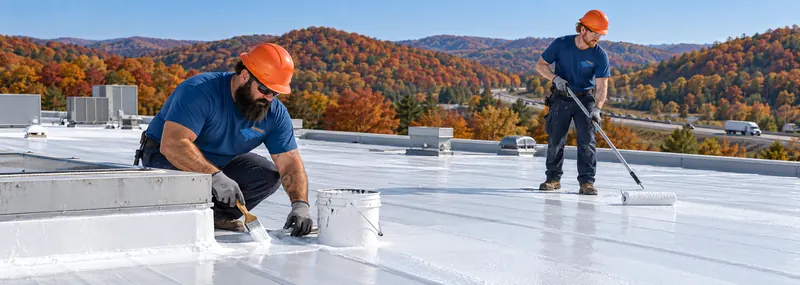
Bright white and water-based, for sheds and pre-engineered buildings that drain fast. It cures on warm, dry days and cleans up with water.
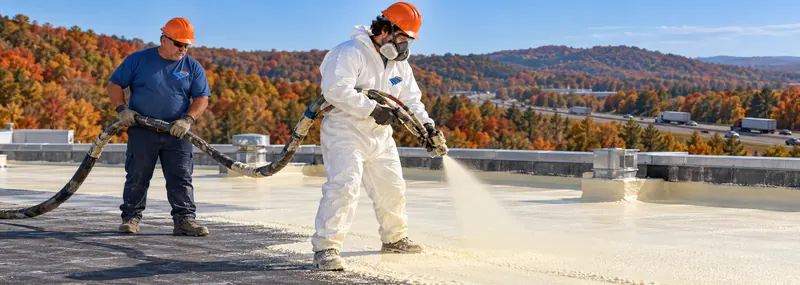
Closed-cell foam buries screws and laps, adds insulation, and gets a coating on top. Edges and gutters get re-detailed for the added thickness.
These gains hold on metal roofs whose panels are attached and mostly solid. Each one ties back to a part of the roof we can point to.
Coating keeps the existing steel on the building, so there is no tear-off debris and no open roof over your inventory during the work.
Each screw ends up capped under sealant and coating, which closes the hundreds of small leak points an exposed-fastener roof carries.
A white top coat reflects sun off the panels, which cuts the heat reaching cooled space below on Kentucky summer afternoons.
A worn coat can be cleaned and recoated later with the same product, a smaller job than replacing steel.
Get a figure for treating the rust and sealing the laps before it eats through. A ballpark range takes about two minutes.
Four stages on every metal roof, with the screws and laps finished before the field coat.
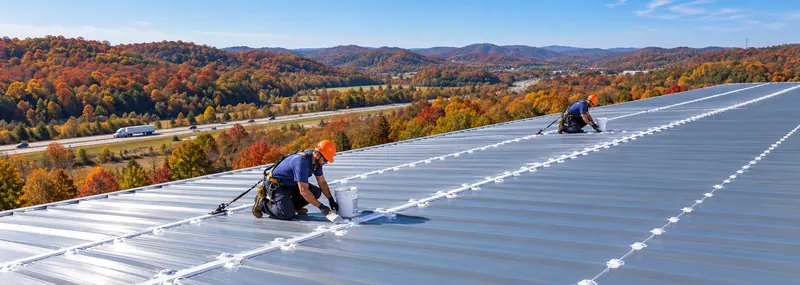
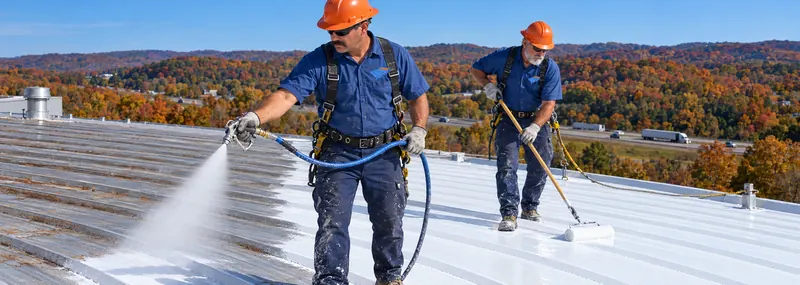
We walk every run of panels, mark rust and loose screws, and check ridge caps, gutters, and skylights. From inside, we look for daylight at laps and rust on purlins.
Holes get metal patches or new panels, wallowed screw holes get larger screws, and loose ridge caps get tightened down before cleaning starts.
A power wash with an approved cleaner and a full rinse leave bare panels. Red rust gets brushed to firm metal, and rusted or galvanized steel gets its listed primer.
Fabric or seam tape goes over every lap, sealant caps every screw, and base and top coats cover the field. Mil thickness gets checked as each coat goes on.
Some roofs need a different finish or added insulation. These systems also go over steel panels.
For low-slope metal where water sits at gutter lines and behind curbs after a storm.
Silicone Roof Coating in Elizabethtown →Bright white, water-based coating for pitched panels that shed rain within hours.
Acrylic Roof Coating in Elizabethtown →Insulating foam over the panels for shops and warehouses that sweat or bake.
Spray Foam Roofing in Elizabethtown →Answers about rust, permits, and keeping the building running during the work.
That turns on how much steel is left. Surface rust and leaking laps point to a coating, scattered holes to a restoration with spot panel swaps, and rust-through along whole runs to re-paneling. Sagging purlins or rust everywhere mean a new roof, with the building interior exposed during that work.
Yes, it changes both the cleaning and the primer. White rust is the chalky powder that forms on galvanized steel when its zinc meets trapped moisture, often along side laps. We scrub and rinse it off, use a primer listed for galvanized metal, and run a pull test on a small patch first.
Most buildings stay open, since the work stays on top of the panels. We cover rooftop air intakes when solvent products are in use, schedule lift moves around loading docks, ask for cars to move on spray days, and keep hatches clear for your staff.
Inside Elizabethtown, the City Planning and Development Department handles it. Cecilia and Glendale go to the Hardin County inspector, Leitchfield to the Grayson County inspector, and Hodgenville to the LaRue County inspector, per the state contact sheets. Confirm with the office before work starts.
City Planning and Development reviews plans and inspects most construction there, including a commercial inspector. Two other offices can come into it: the state does HVAC inspections when a rooftop unit gets lifted, and the Hardin County Health Department handles plumbing if a drain leader changes.
Send us the building address and what is leaking. We will walk the panels and show you the rust, screws, and laps that need work.
Leave a name and number, and we will call to talk through the leaks, rust, or coating question on your building.
Or call (270) 236-5261 now