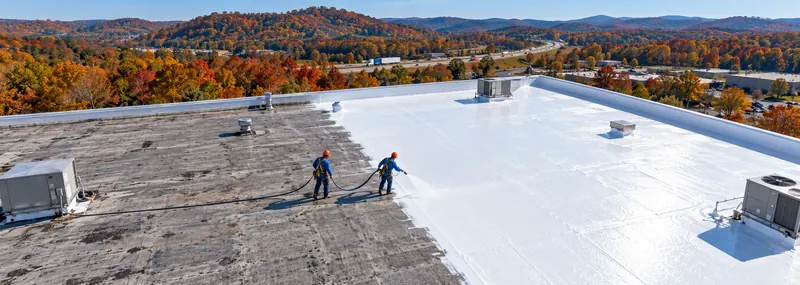
Full Field
Silicone Across The Roof
Base and top coats over the whole roof once laps, screws, and gutters are sealed. This fits low roofs that puddle across the field as well as at the eave.

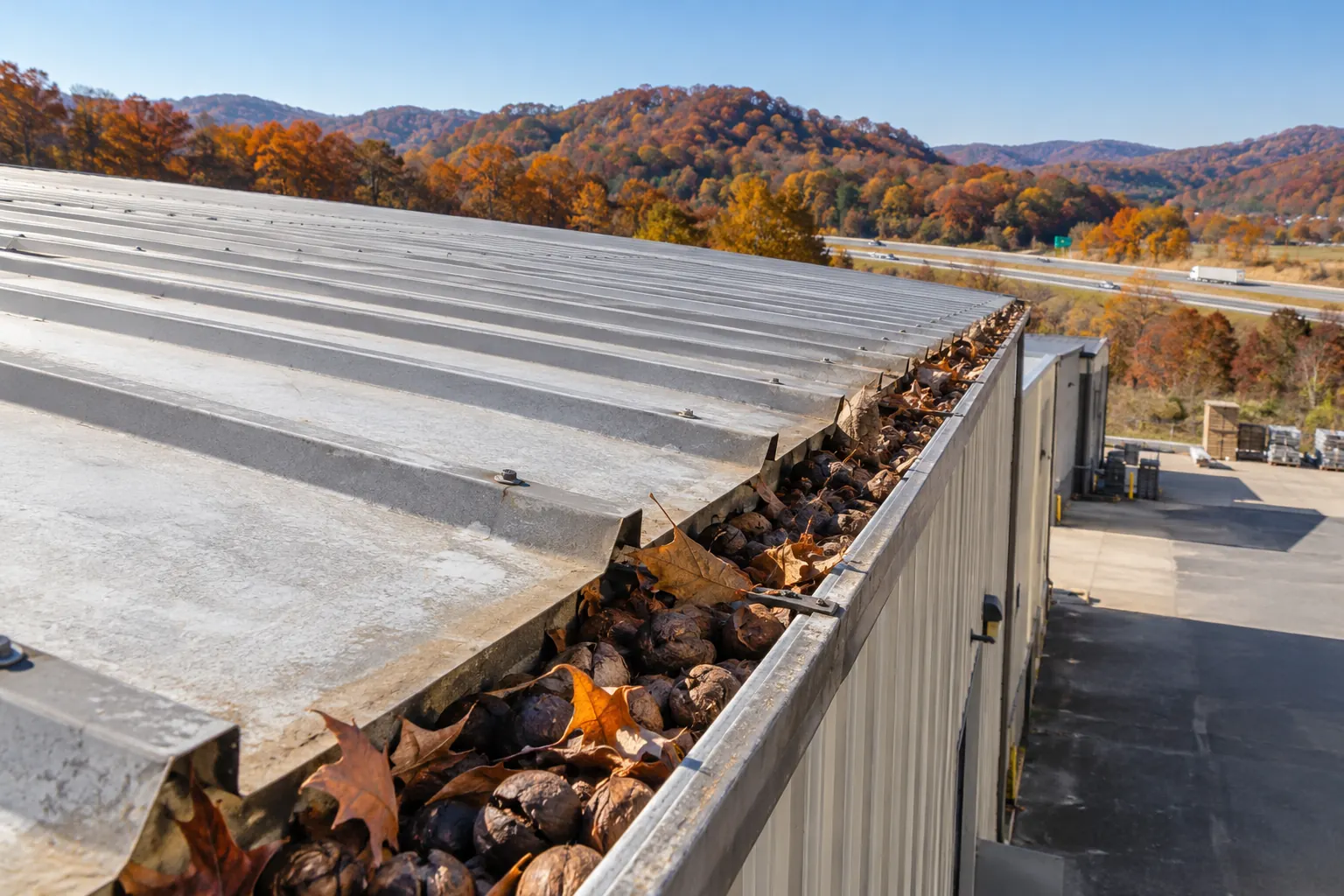
We install silicone roof coating in Elizabethtown on low roofs that hold water. We find every wet low spot first, then clear and clean the gutter lines before spraying.
Silicone roof coating in Elizabethtown fits low roofs where puddles linger after rain. The table shows what is ready and what needs work before the first coat.
| Roof Part | Ready To Coat | Fix First |
|---|---|---|
| Low Spots | Water drying within a couple of days | Sagging deck under a puddle gets repaired |
| Gutters | Solid troughs with split seams | Rusted-out bottoms get new gutter sections |
| Curbs | Water backing up on the uphill side | Rusted steel under a unit gets replaced |
| Old Coating | Silicone already on the roof | Acrylic or tar coats need a compatible primer |
| Steel | Light surface rust | Holes get patched or panels swapped |
On a low pitch, water lingers in the same places every storm. These are the spots that bring owners to silicone.
Leaves and grit dam the trough, so water backs up under the panel ends at the eave. Clearing the gutter and outlets comes before any coating on that edge.
Each rooftop unit curb blocks the flow, and a puddle forms on its uphill side. Rust under the curb shows how long that water has been sitting there.
At the low end of a long panel run, end laps sit in the last water to drain. Capillary pull draws that water into the joint.
Additions tied to an older roof leave a flat valley where two slopes meet. Water stands in that crease, and the flashing there opens first.
Silicone picks up dust, so a white roof turns gray with time. Gray still sheds water, but it reflects less sun than when new.
Silicone goes on in a few different ways around Elizabethtown, set by what is under it and where the water stands.
Base and top coats over the whole roof once laps, screws, and gutters are sealed. This fits low roofs that puddle across the field as well as at the eave.
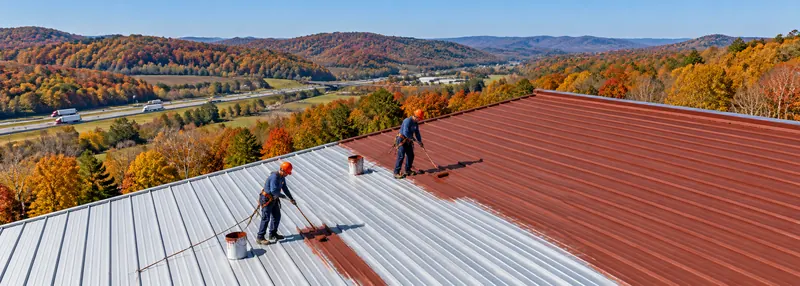
Gutter lines and the uphill side of curbs get silicone, while acrylic covers the faster-draining field. Each product stays where it works best, and the joint between them gets fabric.
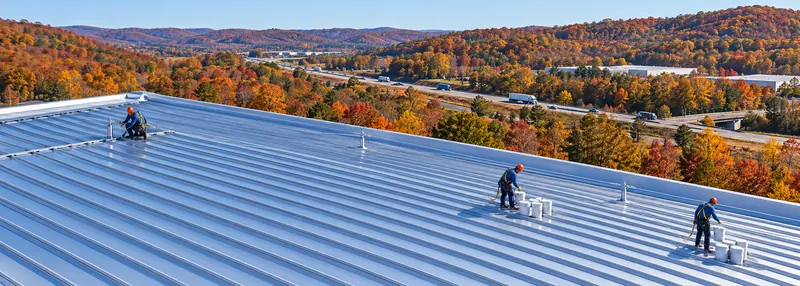
New spray foam on flat sections that hold water takes a silicone topcoat, which adds UV cover over the insulating layer and handles the puddles.
Silicone earns its place where water stands. These benefits apply when the deck and panels under the puddles are firm.
Silicone resists water that sits for days at gutter lines and curbs, the spots where acrylic softens and washes thin.
Sunlight breaks silicone down slowly, which suits wide, exposed roofs that bake all summer near I-65.
The old panels stay on the building, so the roof stays closed over stock and staff during the work.
Years later, a cleaning and a fresh silicone layer renew the surface over the same laps and screws.
Call us with where the water sits and how long it stays. That tells us whether silicone fits or a deck repair comes first.
Four stages, with the wet spots found and dried before any silicone goes down.

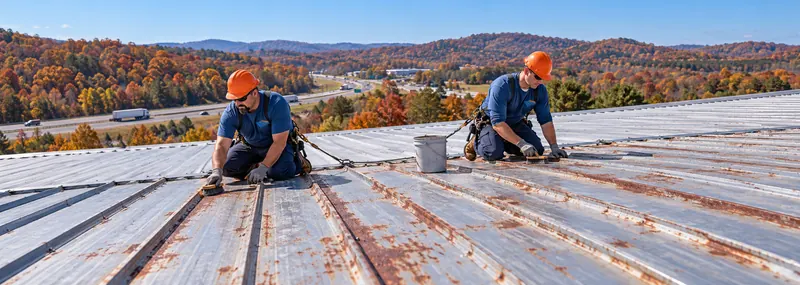
We map where water stands after rain, test wet areas with a meter, and check gutters, curbs, and laps. Inside, stained insulation shows how far water has traveled.
Wet insulation gets replaced, sagging deck under puddles gets fixed, and gutters are cleared so water leaves fast. Holes and rusted panels get handled next.
A wash with the maker-approved cleaner and a rinse leave the surface bare. Bare or rusty steel and any old acrylic get the primer the silicone maker lists.
Laps get fabric, screws get capped, and silicone goes on in base and top passes. We gauge thickness heavier at gutter lines and behind curbs.
Low roofs often need help from a second system on the parts that drain well or run cold.
The full prep for screw-down metal: rust treatment, oversized screws, and fabric at every lap.
Metal Roof Coating in Elizabethtown →A water-based coat for the pitched sections that drain before water can sit.
Acrylic Roof Coating in Elizabethtown →Foam that adds insulation and can build up low spots before a silicone topcoat.
Spray Foam Roofing in Elizabethtown →Answers about standing water, recoats, and the details around skylights and gutters.
Match the coating to the water and the traffic. Silicone suits low metal that holds water at eaves or curbs, acrylic suits pitched metal that drains fast, and urethane suits service paths with heavy foot traffic. Some roofs mix them, like a urethane walkway to the units with silicone on the field.
Each gets its own detail, because these leak before the field does. Translucent panels are replaced or sealed at the edges so daylight still comes through, ridge caps get tightened and their joints reinforced, and gutters are cleaned, primed, and sealed inside the trough with outlets cleared.
Silicone holds onto airborne dust more than acrylic does. On a busy lot or next to a gravel yard, the white finish grays within a few seasons. The coating still keeps water out, though it reflects less sunlight, and a cleaning brightens it.
No, acrylic and most other coatings will not bond to cured silicone. Once a roof is coated in silicone, the next coat should be silicone too. Plan for that before adding rooftop equipment that would need flashing later.
If puddles are still there two days after rain, we treat that area as standing water. Those spots get silicone, or the deck under them gets fixed first if it sags. Spots that dry by the next morning can take acrylic.
Tell us where the water stands. We will map the wet spots, check the deck under them, and price the silicone work.
Leave a name and number, and we will call to talk through the leaks, rust, or coating question on your building.
Or call (270) 236-5261 now